
Category: Door Tips
What Is an AAADM Automatic Door Inspection?
Posted On: October 9, 2026
Your automatic doors open and close hundreds of times each day, often without anyone giving them a second thought. Over time, sensors can stop detecting people correctly, parts can wear out, and doors can open or close too slowly or too quickly. These changes may seem minor, but they can affect how safely the door operates.
An AAADM Automatic Door Inspection checks for these issues before they become a bigger concern. A certified inspector evaluates the door against national ANSI/BHMA safety standards and documents its condition. For a New Jersey business, this inspection provides a clear record that the door was checked for safe operation and compliance.
What Is an AAADM Automatic Door Inspection?
An AAADM automatic door inspection is a yearly safety evaluation of an automatic door, performed by an AAADM Certified Inspector. It checks the door’s sensors, speed, safety features, and signage against ANSI/BHMA standards, then documents the result on an official AAADM inspection record and compliance label. AAADM recommends this inspection at installation and at least once every year after that.
Skip it, and you have no way to know the door is safe. Doors can look fine while a failing sensor or worn part makes them unsafe, and a certified inspection is what identifies those problems in time.
Who Is AAADM and Why Do Their Inspections Carry Weight?
AAADM stands for the American Association of Automatic Door Manufacturers. The trade association was formed in 1994 to raise public awareness of automatic door safety and to run the program that trains and certifies automatic door inspectors. It does not pass laws or enforce them. Instead, AAADM sets the standard that manufacturers, insurers, and facility managers across the country use to judge whether a door is safe and properly maintained.
Inspections carry weight because of who performs them and what they measure. The standards behind every inspection come from the Builders Hardware Manufacturers Association (BHMA), the ANSI-accredited body that develops and maintains the A156 series. Only a certified inspector can issue an official AAADM record confirming a door was checked against those standards.
Did You Know?
A safe automatic door depends on three layers of care: correct installation, a certified inspection once a year, and a quick owner check every day. Leave out any one of the three and the door is no longer fully protected.
What Does an AAADM Automatic Door Inspection Cover?
A certified inspection is a full check of the whole door system, not a quick glance and a signature. Each H3 below covers one part of what the inspector checks.
Sensor and Activation Testing
Here is what the inspector confirms on the sensors:
- The door opens reliably as a person approaches
- Presence sensors hold the door open while someone is in the threshold
- The door never closes on a person or object standing in its path
Opening Speed and Hold Time
| Setting | What the Inspector Checks |
| Opening speed | Fast enough for traffic, not so fast it is unsafe |
| Closing speed | Slow and controlled so it cannot catch a slower visitor |
| Hold-open time | Long enough for a careful pace, measured against the standard |
Safety Features and Signage
- Guide rails: Checked for presence and secure fixing
- Caution decals: Confirmed legible and correctly placed
- Two-sided signage: Verified visible from both approaches
- Markings by door type: Matched to the door’s category
Wear and Component Condition
Rollers, belts, hinges, and the operator all get examined for wear. Why it matters: identifying a worn part during the inspection prevents a breakdown later, which often happens at a busy time, when an emergency repair costs far more than a planned one.
Documentation and Compliance Label
The inspection ends with the paperwork that gives it value. The inspector issues the official AAADM inspection record and applies the annual compliance label to the door, so the owner receives documented proof the door was checked against the standard.
The Safety Standards Behind the Inspection
Every AAADM automatic door inspection measures a door against the ANSI/BHMA A156 family of safety standards, developed through the American National Standards Institute (ANSI). Each door type answers to its own standard, and the inspector applies the right one to the system in front of them.
| Standard | Door Type It Governs |
| A156.10 | Sliding and swinging full-power automatic doors |
| A156.19 | Power-assist and low-energy doors at accessible entrances |
| A156.38 | Low-energy sliding and folding power doors |
| A156.27 | Revolving pedestrian doors, powered and manual |
These standards define how a door should sense people, how fast it opens and closes, how long it holds open, what signage it needs, and how its safety features must perform. The inspection confirms the door still meets the exact standard that governs it.
Why Does Your Business Need an AAADM Inspection?
Certified inspection protects your people, your compliance, and your budget at once. Each H3 covers one angle, in a different shape.
Protecting the People Who Use Your Doors
Automatic doors move with real force, and a worn roller or a slow sensor can make an entrance unsafe. A certified inspection identifies the failing sensor, the incorrect timing, and the worn part a daily glance would miss, which keeps the door safe for everyone who walks through.
Staying Compliant With ANSI and ADA
The compliance picture comes down to a few clear points:
- Full-power public doors are expected to meet ANSI/BHMA A156.10
- Low-energy doors are expected to meet A156.19
- Public-facing doors tie into the ADA’s 2010 Standards for Accessible Design
- A certified inspection confirms the door meets the right one
Limiting Your Liability
Keep on File
After an incident, the record you can produce is what protects you. A signed AAADM inspection record shows the door was checked to standard. No record means no proof, and proof is very hard to assemble after the fact.
Preserving Warranties and Insurance
- Warranty risk: An uncertified repair can void the manufacturer’s warranty and leave you covering the next fix in full.
- Insurance risk: Liability claims can be denied if an investigation shows the door was never maintained by certified professionals. Certified inspection protects both sides.
Avoiding Costly Downtime
Identifying a small fault early prevents the emergency call-out and the unexpected door failure that disrupts a busy day. A yearly inspection keeps the door running and spreads its cost of ownership over a longer service life.
How Often Do You Need an AAADM Automatic Door Inspection?
AAADM’s recommendation is straightforward: have a certified inspector check the door right after installation, then at least once a year after that. Annual is the minimum, not the maximum. Doors at a high-traffic entrance, or ones that have just had repairs, often need a check sooner.
Between those professional visits, the owner’s daily check matters. Watch the door cycle for an approaching person, confirm it stops and reverses on an obstruction, look over the panels and signage for damage, and keep the threshold clear of mats or displays. You can follow the official routine on the AAADM Daily Safety Check page.
When Should You Book an Inspection?
Beyond the yearly schedule, certain moments call for a certified inspection right away:
- Right after installation, before the door serves the public
- After any repair or part replacement that affects how the door operates
- When the door behaves unusually, closing too fast, hesitating, or failing to sense people
- Before a compliance audit or insurance review, to have current documentation in hand
- When you take over a building and have no inspection record for its doors
How Much Does an AAADM Inspection Cost and How Long Does It Take?
Cost and timing are the two questions most owners ask first, so here are the honest ranges:
- Cost: A single-door inspection is a modest service fee, and most companies price multiple doors at the same site at a lower rate per door. Any repairs found are quoted separately.
- Time: A straightforward inspection of one door usually takes under an hour, with a few more minutes per additional door on the same visit.
- Value: Set against a single emergency repair, a voided warranty, or a denied insurance claim, the inspection is the smaller cost by a wide margin.
For an exact figure, a certified NJ company will quote based on the number and type of doors at your site.
What Happens If a Door Fails Inspection?
Failing an inspection is not a penalty. It is the process working as intended. When a door does not meet the standard, the inspector documents exactly what fell short, from a slow sensor to a worn operator. You then have a clear, prioritized list of what to fix. A certified company can carry out those repairs to the correct standard and reinspect, so the door ends up both repaired and documented with a passing record and compliance label.
Inspection vs Maintenance: What Is the Difference?
The two often get confused, yet they do different jobs:
| AAADM Inspection | Routine Maintenance | |
| Purpose | Verify safety and compliance | Keep the door running smoothly |
| Who performs it | A certified inspector only | A qualified service technician |
| Output | Official record and compliance label | Servicing and adjustments |
| Frequency | At least annually | As scheduled or as needed |
The short version: maintenance keeps the door working, while the inspection confirms it is safe and compliant. A sound program uses both.
Which Businesses Need AAADM Inspections?
Public-facing automatic doors appear across most commercial settings, and each carries the same duty of safe operation:
- Healthcare: Hospitals, clinics, and medical offices with constant foot traffic
- Hospitality and retail: Hotels, restaurants, stores, and shopping centers
- Public and institutional: Schools, municipal buildings, and places of assembly
- Workplaces: Office buildings and property-managed facilities
Wherever the public walks through an automatic door, the owner carries the duty for its safe operation. That duty is what makes a yearly certified inspection a sound practice rather than an optional expense.
Scheduling Your Inspection With a Certified NJ Team
New Jersey businesses are best served by a company whose inspectors hold the AAADM credential, not a general contractor who handles doors on the side. One certified team can run the inspection, produce the compliant record, and complete any repairs to standard, which saves you coordinating several vendors for one door.
Alpha Doors & Securtiy is an AAADM Certified Inspectors Company in NJ, carrying out automatic door inspections, service, and repair to ANSI/BHMA standards. Our work helps keep your entrances safe and your paperwork in order.
Frequently Asked Questions
What is an AAADM automatic door inspection?
An AAADM automatic door inspection is a yearly safety evaluation of an automatic door by a certified inspector, checking it against ANSI/BHMA standards and recording the result on an official AAADM inspection record.
How often is an AAADM inspection required?
AAADM recommends an inspection right after installation and at least once a year afterward by a certified inspector, with a daily safety check by the owner in between.
What does the inspection check?
The inspection covers sensor and activation testing, opening speed and hold time, safety features and signage, the condition of worn parts, and the documentation that proves compliance.
How long does an AAADM inspection take?
One door usually takes under an hour, with a little extra time for each additional door inspected on the same visit.
How much does an AAADM inspection cost?
A single door carries a modest service fee, with per-door pricing usually lower when several doors are inspected on one visit. Any repairs are quoted separately.
What happens if my door fails the inspection?
The inspector documents what fell short and gives you a list of needed repairs. Once a certified company fixes them to standard and reinspects, the door receives a passing record and compliance label.
Conclusion
An AAADM automatic door inspection is more than a routine check of a door. It is a formal evaluation against the national safety standards that keep automatic doors safe for the public, documented with an official record only a certified inspector can issue. For a New Jersey business, a yearly inspection protects the people walking through your doors, keeps you compliant with ANSI and ADA, preserves your warranties and insurance, and provides the documentation you need if an incident ever occurs.
Due for a certified check on your automatic doors? Alpha Doors & Security schedules AAADM automatic door inspections for businesses across New Jersey, documentation and any repairs included. Reach out to book a visit and keep your entrances safe, compliant, and on record.










Alpha Doors & Security
Related Blogs
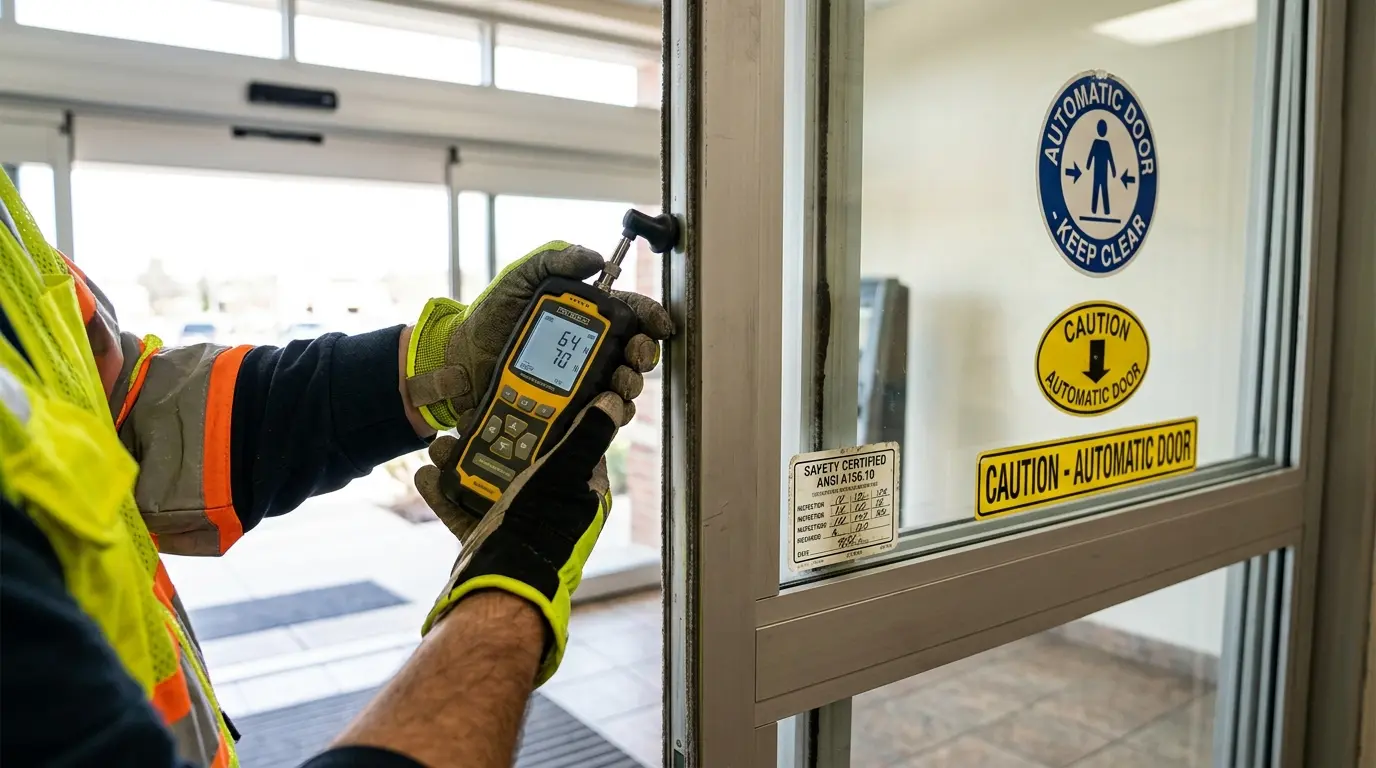
What Is an AAADM Certified Inspector and Why Does It Matter for Automatic Doors?
Every day, countless people trust your automatic doors to open smoothly and never close on…
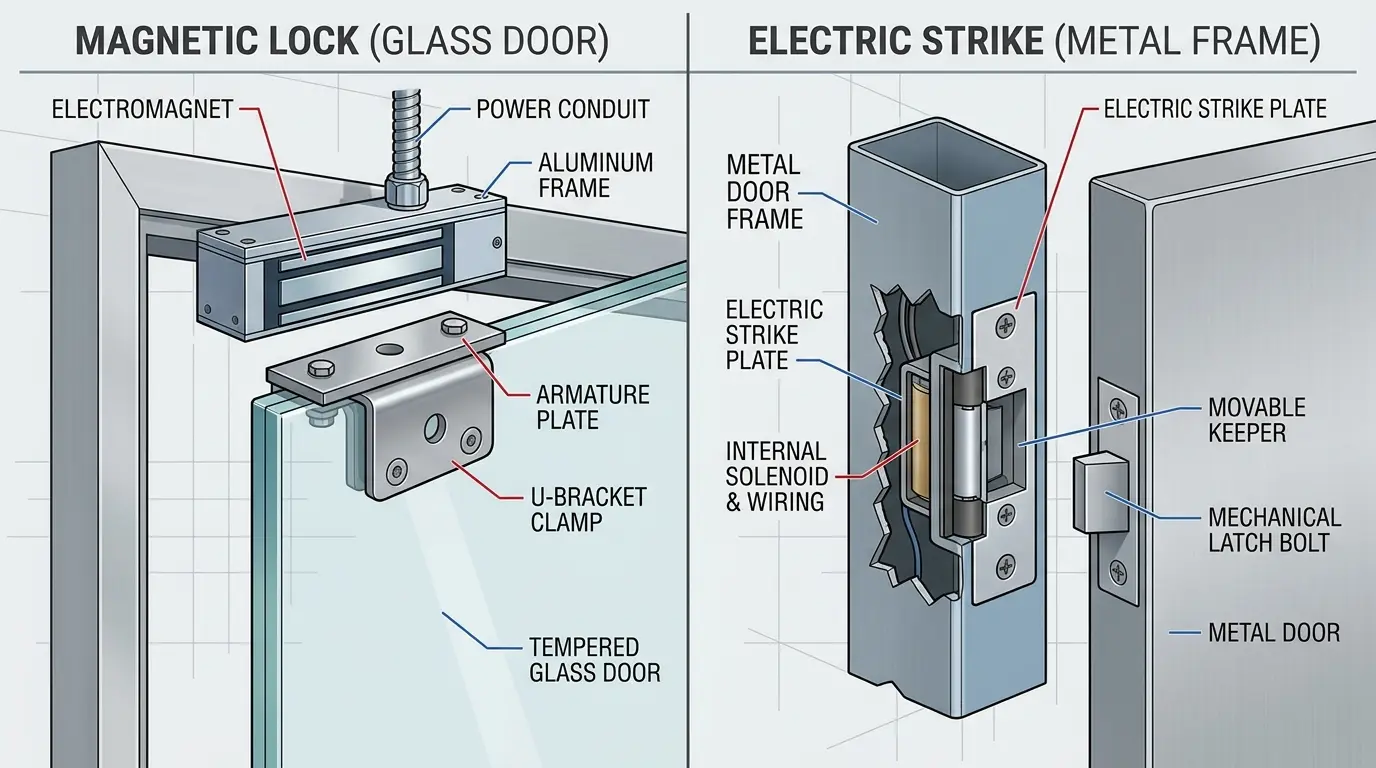
Magnetic Locks vs Electric Strikes for Commercial Doors
Your commercial door needs controlled access, but which locking system actually makes sense for your…
How Electrified Door Hardware Improves Building Access Control
A key can lock a commercial door, but it cannot dictate who should enter, when…
Delayed Egress Doors: What NJ Businesses Should Know
A business may want an exit door to stay secured against theft or unauthorized movement…
Why Exit Doors Must Open Easily in Commercial Buildings
An exit door that sticks during a normal workday is frustrating. During a fire, power…
Panic Bar Repair vs Replacement: What Business Owners Should Know
A staff member leans into your rear exit with a full tray, the bar clicks but the…
What Are Panic Bars and When Does Your Business Need Them?
You have seen them on almost every store, school, and office exit, a long horizontal bar across…
Why Commercial Doors Get Stuck and How to Fix Them
A commercial door can work perfectly for months and then suddenly become difficult to open…
Commercial Door Repair vs. Replacement: Which Option Is Best?
A commercial door stops working. What comes next? Many business owners struggle to decide between…
How Much Does Commercial Door Installation Cost in NJ 2026?
In commercial spaces, doors face constant use, weather exposure, and heavy foot traffic, which leads…