
Category: Door Tips
What Is an AAADM Certified Inspector and Why Does It Matter for Automatic Doors?
Posted On: October 8, 2026
Every day, countless people trust your automatic doors to open smoothly and never close on them, from a parent with a stroller to an older customer with a cane. Keeping that trust intact is exactly the job of a certified professional.
An AAADM Certified Inspector is a technician trained and certified by the American Association of Automatic Door Manufacturers. They inspect automatic doors against the national ANSI/BHMA safety standards and issue the official record that proves a door is compliant. For a New Jersey business, understanding this role is the difference between a door you can rely on and one that turns into a liability.
Why does it matter so much? Because automatic doors answer to national safety standards, and only a certified professional can confirm your door meets them and give you the documentation to prove it.
What Is an AAADM Certified Inspector?
An AAADM Certified Inspector is a technician trained and certified by the American Association of Automatic Door Manufacturers to inspect automatic doors for compliance with ANSI/BHMA safety standards. Only a certified inspector can issue an official AAADM inspection record and apply the annual compliance label to a door. Certification is renewed every year to keep the inspector current with the standards.
Bring in a technician without that credential and you are guessing. Automatic doors answer to national safety standards, and only a certified professional can confirm your door meets them and hand you the record that proves it.
What Is AAADM?
AAADM stands for the American Association of Automatic Door Manufacturers. The trade association launched in 1994 to raise public awareness of automatic door safety and to run the program that trains and certifies automatic door inspectors. It does not write law or enforce it. Instead, AAADM sets the benchmark that manufacturers, service providers, insurers, and facility managers across the country treat as the mark of a door being safe.
The association also stands behind the national standards that spell out how automatic pedestrian doors should behave. Its certification program trains inspectors to measure a door against those standards, and that is where an AAADM inspection gets its authority. You can read the association’s own safety guidance on the official AAADM website.
Did You Know?
Automatic doors open and close around 50 billion times a year in the United States, and they hold an exceptional safety record. That record depends on three things working together: correct installation, an annual inspection by a certified inspector, and a daily safety check by the owner.
What Does an AAADM Certified Inspector Do?
An AAADM Certified Inspector does far more than glance at a door. Through formal training, they learn to install, service, repair, and inspect automatic door systems against the ANSI/BHMA safety standards that govern power-operated pedestrian doors.
The credential is not a badge earned once and framed on a wall. An inspector renews it every single year, which keeps their knowledge current as standards shift and door technology moves on. One detail makes the certification especially valuable: only an AAADM Certified Inspector can issue an official AAADM inspection record and apply the annual compliance label to your door.
Worth Knowing
A signed AAADM inspection record, or a work order from a certified inspector, is your proof that the door was checked against the standard. No certification, valid record, and nothing to show if anyone ever asks.
How Does a Technician Become AAADM Certified?
Becoming certified is not quick, and that is exactly the point. The effort behind the credential is what makes it mean something when you see it. AAADM runs two tracks: the Certified Inspector Training Program for standard automatic doors and the Revolving Door Inspector Training Program for revolving systems.
Who Can Qualify
Nobody walks in off the street and sits the exam. Candidates need real hands-on time in the industry first:
- Six months of experience working with automatic doors, or
- Ninety days of experience plus a completed factory training course from an AAADM member manufacturer
What the Training Involves
The program blends theory with practice so an inspector understands both how a door should work and how it behaves in the real world:
- Classroom instruction on how automatic doors operate, where they commonly fail, and the latest safety standards
- Hands-on sessions spent finding and fixing faults in actual door components
- A comprehensive exam covering installation, inspection, and maintenance, passed only with a score of 80 percent or higher
Staying Certified Year After Year
Certification runs for one year, then an inspector has to earn it again by passing a fresh exam that confirms they know the current ANSI regulations. That yearly renewal is the quiet reason certification matters so much. It separates an inspector who is genuinely up to date from one who trained years ago and never looked back.
Certified Versus Non-Certified Technicians
Here is the honest difference. Almost anyone handy can put a temporary fix on a misbehaving door, and it might even hold for a week or two. A certified inspector finds why the door failed in the first place and makes sure the problem does not creep back. Automatic doors are genuinely complex, and a well-meaning technician who adjusts one without understanding how the parts depend on each other can quietly create three new problems while fixing one.
The gap shows up in ways that matter to a building owner:
- Diagnosis: A certified inspector chases the root cause instead of silencing the symptom
- Standards knowledge: Their training covers the exact ANSI and ADA requirements your door has to meet
- Documentation: Only a certified inspector can produce a valid AAADM record and compliance label
- Accountability: A certified credential can be checked and confirmed, where a vague claim cannot
Quick Tip
Before you hand anyone the keys to your entrance, ask one simple question: are your inspectors AAADM certified, and can you show me the documentation? A company that hesitates or cannot confirm it has told you everything you need to know.
The Safety Standards Behind the Certification
Automatic doors live under the ANSI/BHMA A156 family of safety standards, with a separate standard for each kind of door. A certified inspector knows the ones that apply to whatever system is in front of them. You can see the full set on the AAADM ANSI/BHMA standards page.
| Standard | What It Covers |
| A156.10 | Full power-operated pedestrian doors, such as sliding and swing automatics |
| A156.19 | Low-energy and power-assisted doors, common at accessible entrances |
| A156.38 | Low-energy power-operated sliding and folding doors |
| A156.27 | Power and manual revolving pedestrian doors |
These standards decide how a door senses people, how fast it opens and closes, how long it holds open, what signage it carries, and how its safety features perform. A certified inspector measures your door against the exact standard that governs it, rather than giving the whole thing a hopeful once-over.
Why Does an AAADM Certified Inspector Matter?
The payoff from certification touches safety, money, and peace of mind all at once. Each reason below is one more argument for insisting on a certified professional rather than whoever is cheapest this week.
Keeping People Safe
Automatic doors carry real force, and a worn roller or a lazy sensor can turn a friendly entrance into a hazard. These systems lean on multiple sensors to open the door and to stop it closing on anyone in the way. A certified inspector is trained to catch the failing sensor, the drifting timing, and the worn part that a daily glance would sail right past.
Meeting Compliance Expectations
Full-power doors at public entrances are expected to meet ANSI/BHMA A156.10, and low-energy doors to meet A156.19. Where doors serve the public, those standards tie into accessibility duties under the ADA’s 2010 Standards for Accessible Design. Certified training teaches an inspector to spot both ANSI and ADA shortfalls, which makes a certified inspection one of the surest ways to know your door is on the right side of the rules.
Protecting Against Liability
If someone is ever hurt by your door, the first question is whether you kept it properly maintained. A signed AAADM record and the annual compliance label answer that question with paper, not promises. Try reconstructing that proof after an incident without a certified inspector and you will find it close to impossible.
Preserving Warranties and Insurance
Let an uncertified technician loose on your door and you may quietly void the manufacturer’s warranty, leaving you to cover the next repair in full. Insurance carries the same risk. Should a faulty door injure someone, a liability claim can be denied if the investigation shows the door was never maintained by a certified technician. A certified inspector protects both.
Saving Money Over Time
A certified inspector earns their fee by catching small problems before they grow teeth. Spotting a worn part early heads off the emergency call-out, the unexpected downtime, and the failure that always seems to happen on your busiest afternoon. Sloppy repairs do the opposite, overworking other parts and shortening the door’s life. Certified care stretches that life and lowers what the door costs you in the long run.
Keeping the Entrance Secure
Your automatic door does two jobs. By day it welcomes people in, and by night it has to keep them out. Proper maintenance from a certified inspector keeps the door closing and locking as it should, so the entrance that serves customers all day still guards the building once the lights go off.
Protecting Your First Impression
For plenty of customers, your front door is the very first thing they judge you on. A door that grinds, jerks, or traps people in a bottleneck whispers that the business cuts corners. A door that glides open exactly when it should says the opposite before a single word is exchanged.
What Does an AAADM Inspection Include?
A certified inspection is a proper working-through of the door, not a quick look and a signature. During the visit, the inspector runs the safety-critical parts of the system through their paces:
- Sensor and activation testing: Making sure the door sees people and objects and responds the way it should
- Opening speed and hold time: Checking the timing against the standard so the door never slams shut or rushes a slower visitor
- Safety features and signage: Confirming guide rails, decals, and the required caution signage are all present and correct
- Wear and component condition: Spotting tired or worn parts before they give out
- Documentation: Issuing the official inspection record and applying the annual compliance label
When the visit wraps up, you are left with a clear record of the door’s condition and a plain list of anything that needs attention to stay compliant.
How Often Should Automatic Doors Be Inspected?
AAADM’s recommendation is simple: have a certified inspector check the door right after installation, then at least once every year after that. Annual is the floor, not the ceiling. A door at a high-traffic entrance, or one that has just had work done, often deserves a look sooner.
Between those professional visits, the job falls partly to you. A quick daily safety check, following the walk-through on the AAADM label at the door, catches the obvious problems early. You can follow the official routine on the AAADM Daily Safety Check page.
Your 30-Second Daily Door Check
✓ Watch the door open and close as someone approaches
✓ Confirm it stops and reverses the moment something is in its path
✓ Scan the panels, guide rails, and signage for damage
✓ Clear the doorway of mats, displays, or trip hazards
AAADM vs Other Door Certifications
AAADM is the credential to look for on automatic doors specifically, but a few others come up when you are vetting a commercial door company. Knowing what each one actually tells you helps you ask sharper questions:
- AAADM: The door-specific credential, covering automatic door components, safety, inspection, and ANSI compliance
- SafeDoorPM: A planned-maintenance program that puts inspections and service records on a set schedule to cut out surprise downtime
- ISNetworld: A broad contractor safety and qualification platform, not tied to doors
- RAVS Plus: A deeper ISN safety review that only a small share of contractors ever complete
Think of it this way: the others tell you a contractor takes safety seriously in general. AAADM tells you they know your automatic door inside out.
Which Businesses Need AAADM Inspections?
Any business with public-facing automatic doors has a stake in certified inspection, and for many it is close to expected:
- Retail stores and shopping centers
- Hospitals, clinics, and medical offices
- Hotels and restaurants
- Schools, municipal buildings, and places of assembly
- Office buildings and property-managed facilities
Wherever the public walks through an automatic door, the owner owns the responsibility for its safe operation. That is what turns an annual certified inspection from an optional expense into plain good sense.
Finding an AAADM Certified Inspectors Company in NJ
For a New Jersey business, the smart move is a company that staffs AAADM Certified Inspectors rather than a general handyman who dabbles in doors. A certified company can inspect the door, issue the compliant record, and handle any repairs to the right standard, all from one team you only have to call once.
Alpha Doors is an AAADM Certified Inspectors Company in NJ, handling automatic door inspection, service, and repair to the ANSI/BHMA standards that keep a building safe and compliant. Working with a certified team means the inspection, the paperwork, and any follow-up repairs all come from professionals trained to the exact standard your doors answer to.
Frequently Asked Questions
What does AAADM stand for?
AAADM stands for the American Association of Automatic Door Manufacturers. Founded in 1994, it certifies automatic door inspectors and backs the national safety standards for automatic pedestrian doors.
Is an AAADM inspection legally required?
AAADM does not enforce law itself. Its standards are widely referenced by manufacturers, insurers, and facility managers, and full-power public-entrance doors are expected to meet ANSI/BHMA A156.10. Annual inspection by a certified inspector is the recognized way to show compliance.
How often should automatic doors be inspected?
Right after installation and at least once a year afterward by a certified inspector, with a daily safety check done by the owner in between.
Can any technician inspect an automatic door?
Anyone can look at a door, but only an AAADM Certified Inspector can issue an official AAADM inspection record and apply the annual compliance label.
How does a technician become AAADM certified?
They need six months in the industry, or 90 days plus a factory training course, then complete classroom and hands-on training and pass an exam at 80 percent or higher. The credential is renewed yearly by another exam.
Conclusion
An AAADM Certified Inspector is far more than a technician with a title. The certification is proof of training against the national safety standards that keep automatic doors safe for the public, renewed year after year, and it is the only path to a valid inspection record. For a New Jersey business, an annual certified inspection protects the people walking through your doors, keeps you compliant, preserves your warranties and insurance, controls long-term costs, and leaves you with the documentation that matters most on the day you least expect to need it.
If your automatic doors are due for a professional inspection, Alpha Doors & Security brings AAADM Certified Inspectors to businesses across New Jersey. Call to schedule yours and keep your automatic doors safe, compliant, and fully documented.










Alpha Doors & Security
Related Blogs
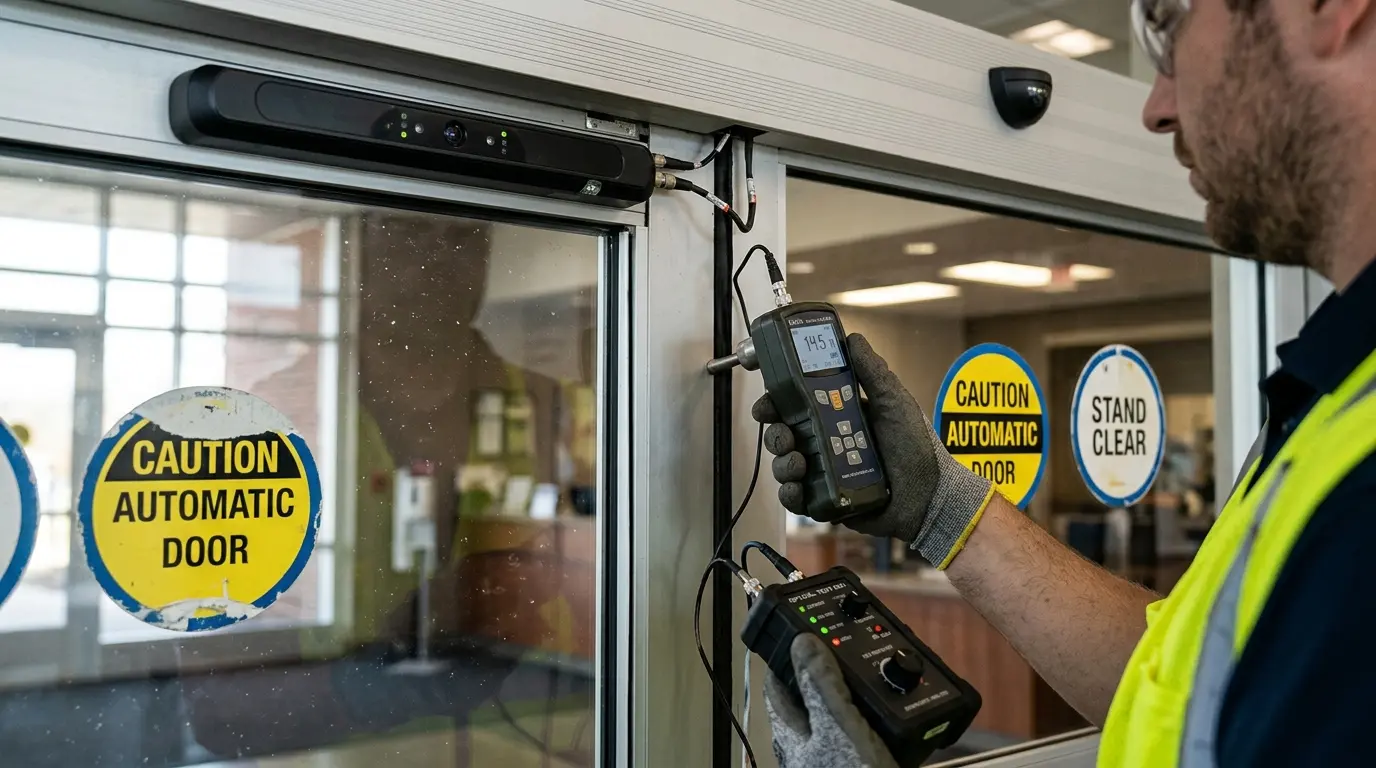
What Is an AAADM Automatic Door Inspection?
Your automatic doors open and close hundreds of times each day, often without anyone giving…
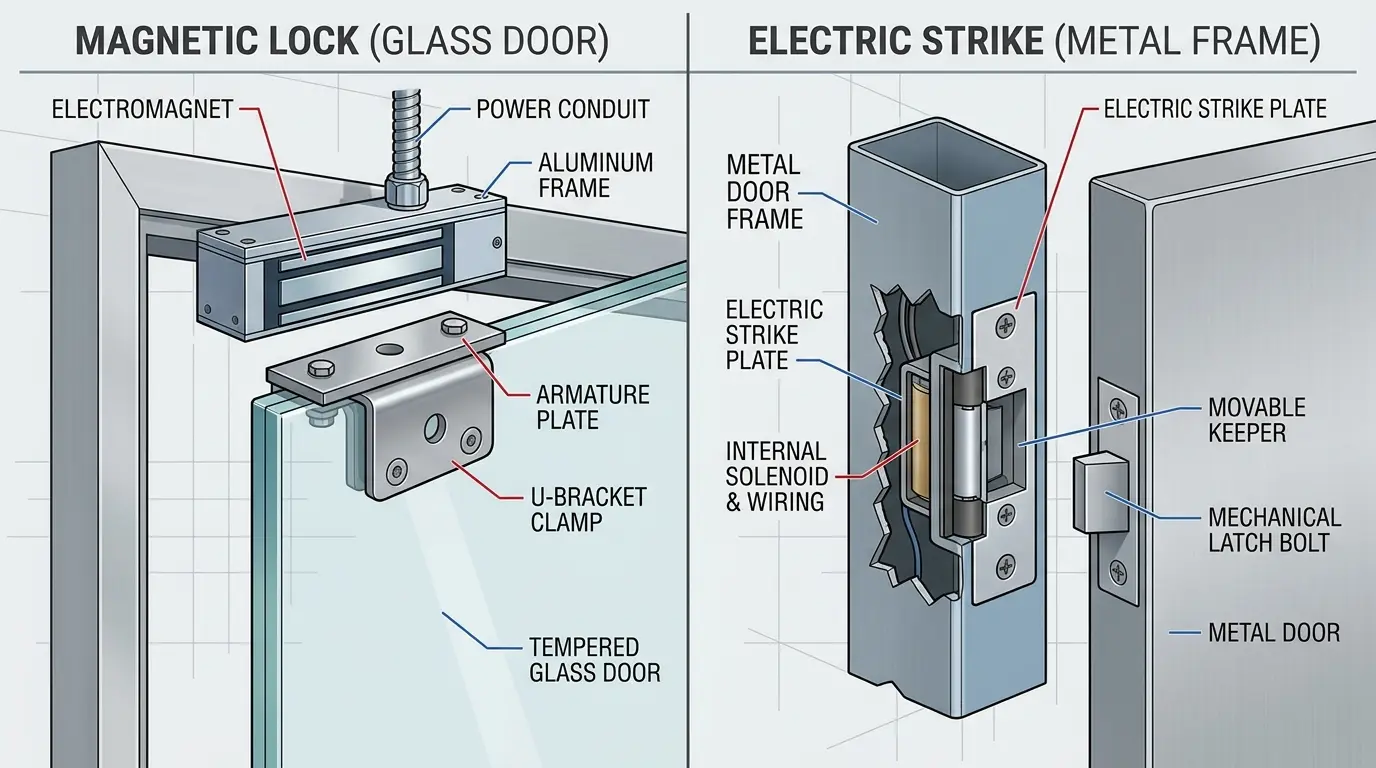
Magnetic Locks vs Electric Strikes for Commercial Doors
Your commercial door needs controlled access, but which locking system actually makes sense for your…
How Electrified Door Hardware Improves Building Access Control
A key can lock a commercial door, but it cannot dictate who should enter, when…
Delayed Egress Doors: What NJ Businesses Should Know
A business may want an exit door to stay secured against theft or unauthorized movement…
Why Exit Doors Must Open Easily in Commercial Buildings
An exit door that sticks during a normal workday is frustrating. During a fire, power…
Panic Bar Repair vs Replacement: What Business Owners Should Know
A staff member leans into your rear exit with a full tray, the bar clicks but the…
What Are Panic Bars and When Does Your Business Need Them?
You have seen them on almost every store, school, and office exit, a long horizontal bar across…

Why Commercial Doors Get Stuck and How to Fix Them
A commercial door can work perfectly for months and then suddenly become difficult to open…
Commercial Door Repair vs. Replacement: Which Option Is Best?
A commercial door stops working. What comes next? Many business owners struggle to decide between…
How Much Does Commercial Door Installation Cost in NJ 2026?
In commercial spaces, doors face constant use, weather exposure, and heavy foot traffic, which leads…