
Category: Commercial Doors
Best Door Hardware for Office Security in New Jersey
Posted On: November 23, 2026
A back door that fails to latch, a former employee who still holds a key or a suite entrance that never fully closes can leave an office exposed without anyone noticing. Many businesses invest in alarms and cameras while overlooking the hardware that actually keeps doors locked. Weak or worn hardware often becomes the easiest way in.
The best door hardware for office security includes Grade 1 commercial locks, high-security cylinders, access control systems, electric strikes or magnetic locks, heavy-duty door closers, reinforced strike plates and hinges, and code-compliant panic bars, chosen based on the door’s location and traffic.
Unsecured doors are a real risk, since FBI data shows that 55.7 percent of burglaries involved forcible entry and 37.8 percent were unlawful entries where no force was used. Choosing the right office door hardware in NJ helps close both gaps by keeping doors strong, latched and controlled.
Best Door Hardware for Office Security
Different office doors need different protection, so a strong setup combines several types of hardware. Here are the most important options, what they do and where they win.
- Grade 1 Commercial Locks
The lock is the core of any secure door, and Grade 1 is the highest commercial rating for strength and durability. Offices usually choose between two main styles.
Mortise Locks: A mortise lock fits into a deep pocket cut into the edge of the door, with the lock body, latch and deadbolt housed inside. This design spreads force across a larger area, which makes the lock harder to break and better suited to constant use. Mortise locks also offer more functions, such as classroom, storeroom and office settings.
Cylindrical Locks: A cylindrical lock installs through two bored holes, one on the face of the door and one on the edge. These locks cost less, install faster and are easier to replace. Heavy-duty Grade 1 cylindrical locks handle interior office traffic well without the cost of a mortise setup.
Winner For: Mortise locks win for main entrances and high-traffic doors, while cylindrical locks win for budget-friendly interior office doors.
- High-Security Cylinders and Restricted Keys
The cylinder is the part of the lock where the key goes in, and it decides who can operate the lock. Standard cylinders accept keys that can be copied at almost any hardware store, so a single unreturned key can create a long-term risk.
High-security cylinders use special key designs that only an authorized locksmith can duplicate, usually with approval from the business owner. Key features include:
- Patented key profiles
- Restricted key duplication
- Pick and bump resistance
- Drill-resistant pins
Winner For: Server rooms, records storage, executive offices and any door where key control matters most.
- Access Control Systems
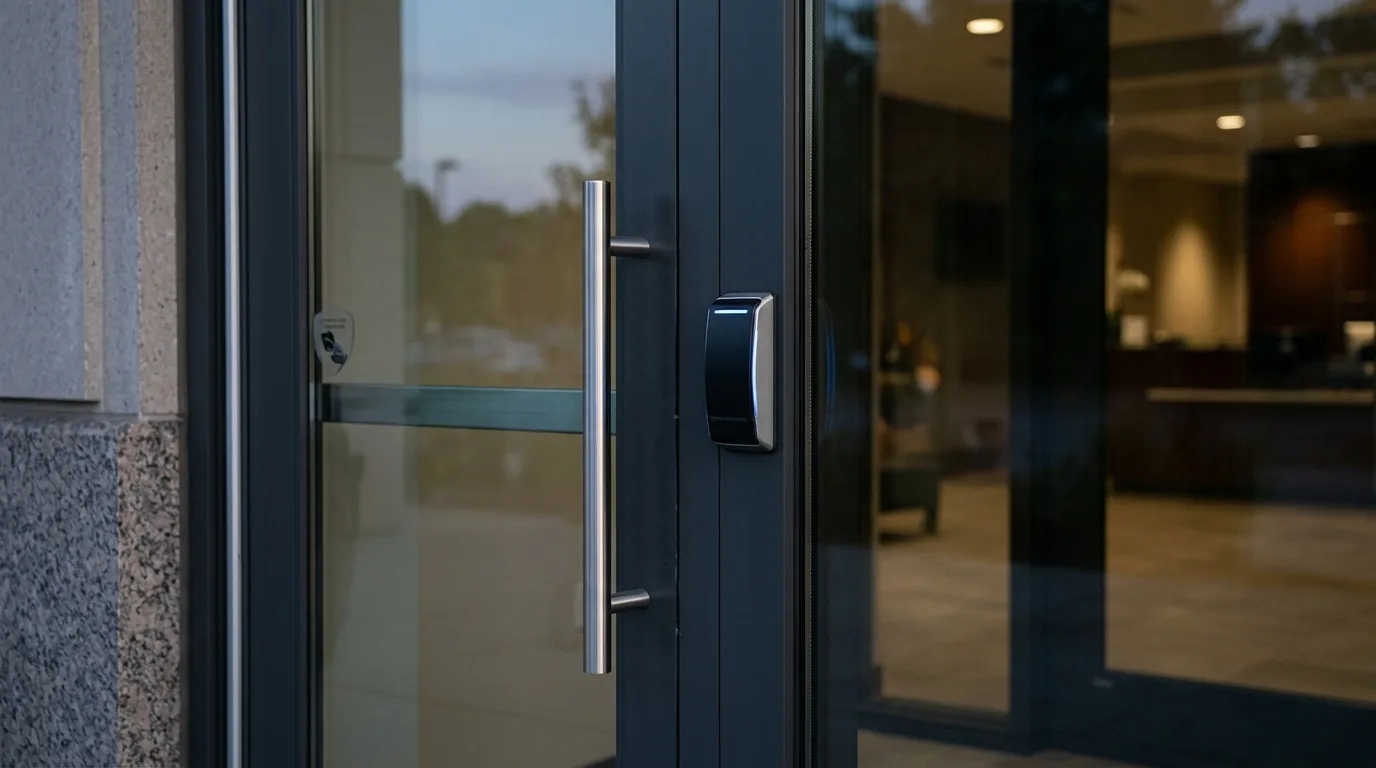
Access control replaces or works alongside traditional keys by using electronic credentials to unlock doors. Managers can decide who enters, which doors they can open and at what times. Insider risk is a real concern for businesses, since organizations lose 5% of revenue to fraud each year, and access control helps limit that exposure.
Common access control options include:
- Key Cards and Fobs: Credentials can be issued or deactivated in minutes without changing any locks
- Keypads: Staff enter codes that managers can update whenever someone leaves the company
- Mobile Credentials: Authorized users unlock doors with a smartphone app
- Entry Logs: Many systems record who entered and when, which helps during security reviews
Winner For: Main entrances, suite doors and offices with frequent staff changes or many employees.
- Electric Strikes
An electric strike replaces the standard metal strike plate in the door frame. Instead of a fixed plate, the strike has a movable keeper that releases the latch when it receives an electronic signal. Electric strikes work with your existing lock, which makes them a practical way to add access control to an office door.
The unlocking process is simple:
- An employee presents a card, fob or code
- The access system sends a signal to the strike
- The strike releases the latch so the door opens
- The door closes and relocks automatically
Electric strikes come in two types. Fail-secure strikes stay locked if power is lost, which protects the office during an outage while still allowing people inside to exit with the lever. Fail-safe strikes unlock when power is lost and suit doors where free entry during an outage is required.
Winner For: Office suites and interior doors that need access control without replacing the existing lock.
- Magnetic Locks
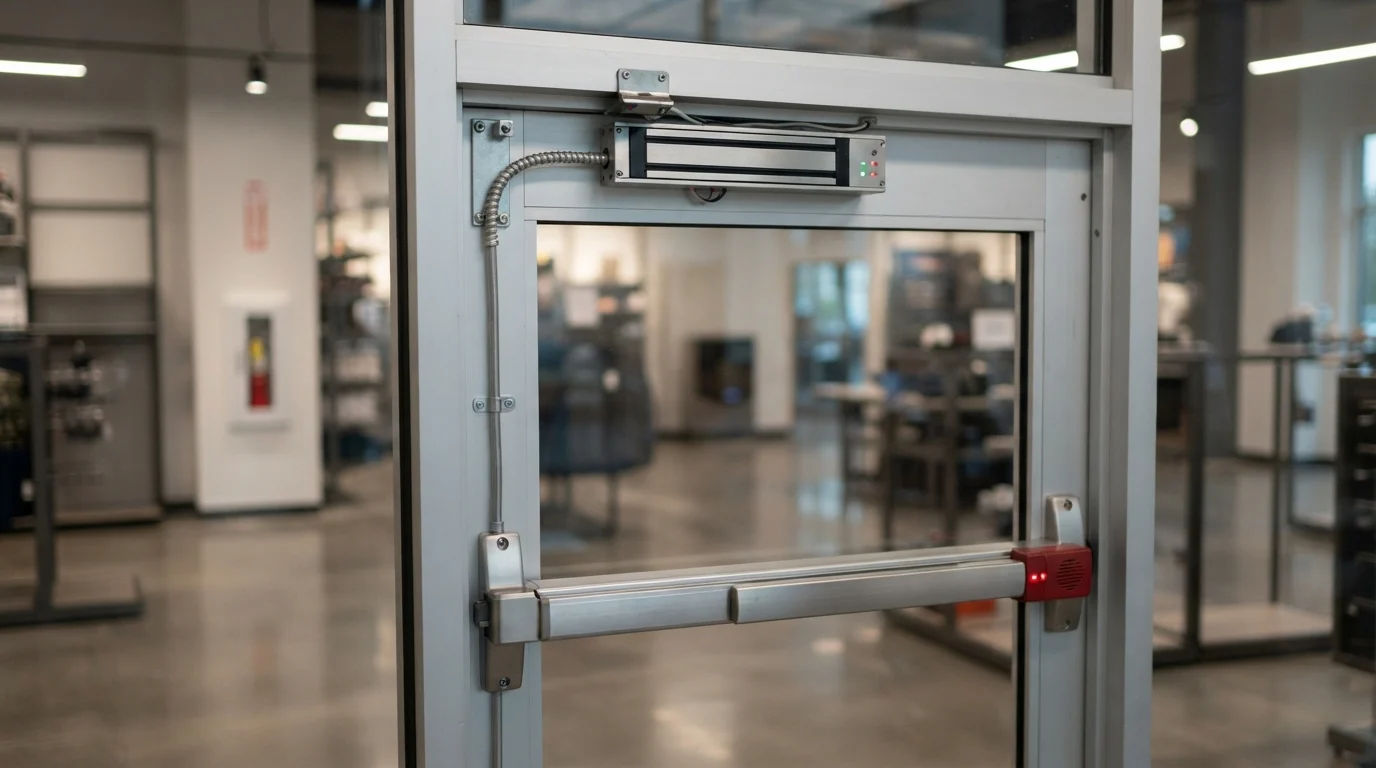
Glass doors and doors without room for a latch are difficult to secure with standard locks. Magnetic locks solve this problem with an electromagnet mounted on the frame and a steel plate on the door. When powered, the magnet holds the door shut with strong holding force.
Strengths: Magnetic locks have no moving parts to wear out, install on almost any door type and suit modern glass entrances well.
Limitations: Magnetic locks release when power is cut, so they must be paired with approved exit devices such as motion sensors and push buttons to meet code requirements.
Winner For: Glass conference rooms, frameless glass entrances and doors where a traditional latch will not fit.
- Commercial Door Closers
Picture a suite door that staff push open all day but that drifts to a stop an inch before latching. The lock is strong, yet the office is unsecured all afternoon. Commercial door closers prevent this by controlling the speed of the door and pulling it firmly shut so the latch engages after people walk through.
Closers come in surface-mounted, concealed overhead and floor-mounted styles. Surface-mounted closers are the most common and easiest to service, while concealed and floor closers suit glass doors and offices that want a cleaner look. Adjustable closing speed and latch speed help the door close fully without slamming.
Winner For: Main entrances, fire-rated doors and any busy door that must close and latch reliably.
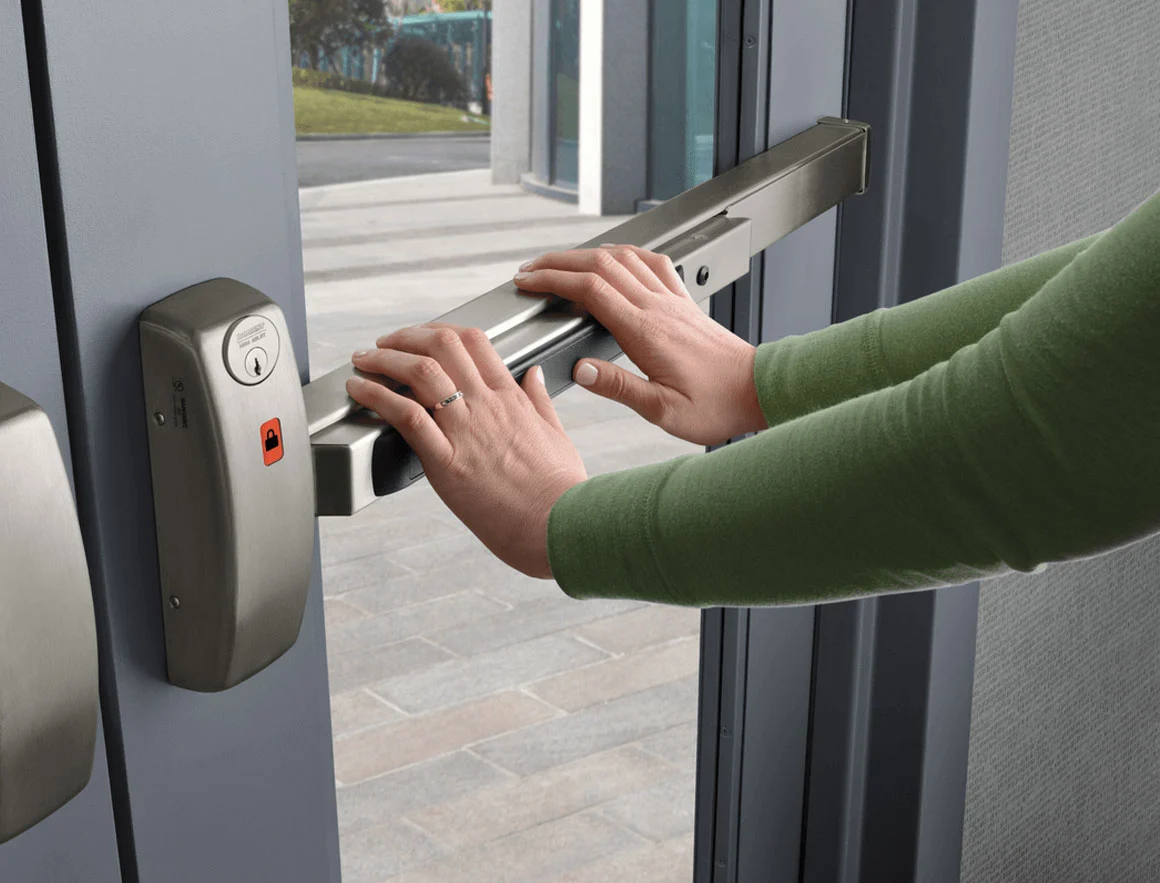
- Panic Bars and Exit Devices
Best For: Rear exits, stairwells, larger office suites and emergency exits
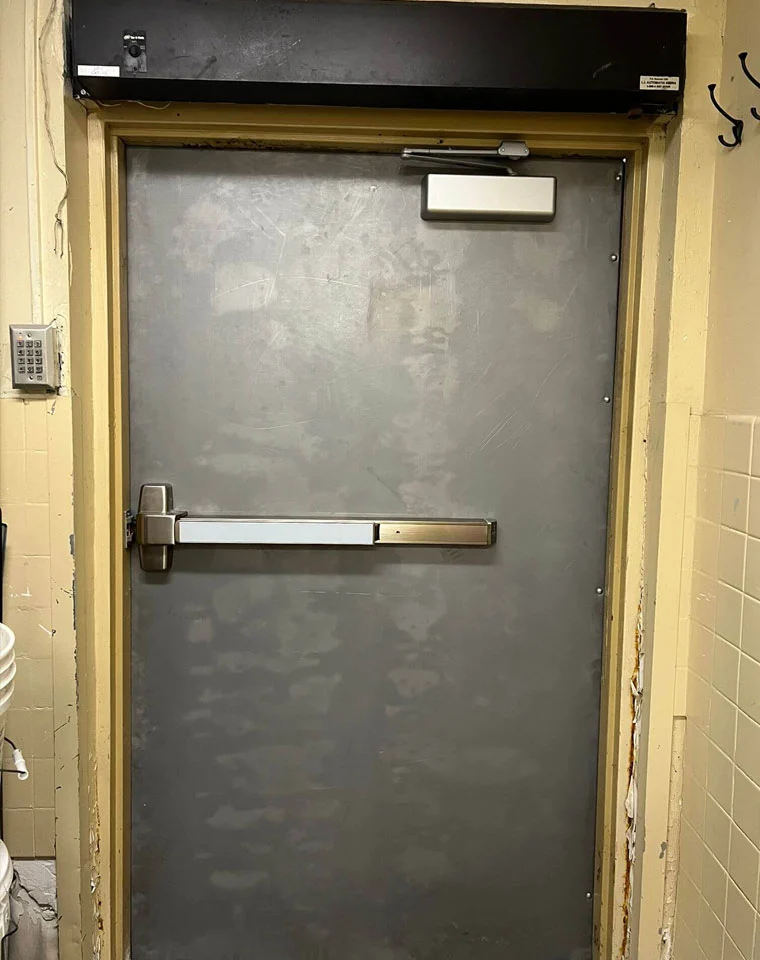
Why It Matters: Panic bars keep doors locked from the outside while allowing people inside to leave quickly with a simple push. Properly installed exit devices balance security with fire and life-safety requirements.
Common Types: Rim exit devices mount on the surface of the door and latch at the frame. Mortise exit devices fit inside the door for added strength. Vertical rod devices latch at the top and bottom of the door, which suits double doors.
Winner For: Emergency exits and egress doors where code-compliant, quick exit is required.
- Reinforced Strike Plates and Door Reinforcers
The strike plate is the metal plate on the frame where the latch or bolt locks into place. Many forced entries succeed because this part of the frame gives way rather than the lock itself. These common weak points have simple fixes:
- Weak Point: Short strike screws that only reach the trim. Fix: Long screws anchored into the framing
- Weak Point: Thin strike plates. Fix: Heavy-duty or high-security strike plates
- Weak Point: Worn door edges around the lock. Fix: Wraparound door reinforcers
Winner For: The best-value upgrade for exterior doors, rear entrances and older office frames.
- Heavy-Duty Hinges and Security Studs
Hinges carry the full weight of the door and take constant stress in busy offices. Commercial hinges are built for this demand, and Grade 1 hinges must pass a rigorous test through 2.5 million cycles of opening and closing.
Offices typically use three hinge types. Butt hinges are standard on most doors, continuous hinges run the full height of the door for extra support, and pivot hinges suit heavy or oversized doors. For out-swinging doors, security studs and non-removable pins stop intruders from lifting the door off its hinges.
Winner For: Heavy entrance doors, out-swinging exterior doors and high-traffic doors that sag over time.
- Intercoms, Cameras and Door Position Sensors
Who is at the door? Intercoms let staff see or speak with visitors before unlocking, so unknown guests never walk straight in.
What happened at the entrance? Cameras record activity at doors and help with incident reviews and insurance claims.
Is the door actually closed? Door position sensors alert managers when a door is propped open or left unlatched, closing a gap that locks alone cannot solve.
Winner For: Reception areas, main entrances and offices that need visibility along with physical security.
Strong hardware works best when it is selected and installed correctly. At Alpha Doors & Security, we partner with trusted brands such as Dormakaba, Schlage, Von Duprin, Yale and ASSA ABLOY, and we keep a large inventory of parts. That means your office gets dependable hardware with a quick turnaround.
Which Door Hardware Wins for Office Security?
No single product protects an entire office, so the real winner depends on the security goal. Here is the final scorecard:
- Best for Strength: Grade 1 mortise locks
- Best for Key Control: High-security cylinders
- Best for Controlling Entry: Access control systems
- Best for Adding Access Control to Existing Doors: Electric strikes
- Best for Glass Doors: Magnetic locks
- Best for Keeping Doors Latched: Commercial door closers
- Best for Emergency Exits: Panic bars and exit devices
- Best Value Upgrade: Reinforced strike plates
- Best for Heavy Doors: Heavy-duty hinges and security studs
- Best for Visibility: Intercoms, cameras and door position sensors
The overall winner is a combined setup. A Grade 1 lock, access control and a properly adjusted closer on main doors give most New Jersey offices the strongest balance of protection, control and convenience.
Matching Hardware to Office Doors
Not all office doors need the same level of protection. This guide shows the hardware that fits common door locations:
| Door Location | Recommended Hardware |
| Main entrance | Grade 1 lock, access control, closer, camera |
| Suite entry | Grade 1 lock, electric strike, intercom |
| Server or IT room | High-security cylinder, access control, door position sensor |
| Executive office | Grade 1 or Grade 2 lock, restricted key |
| Records or storage room | High-security cylinder, reinforced strike |
| Rear or emergency exit | Panic bar, closer, door alarm |
| Stairwell door | Fire-rated hardware, self-closing closer |
| Glass conference room | Magnetic lock with approved exit devices |
New Jersey Code and Safety Requirements for Office Door Hardware
Security hardware must also meet building and fire safety rules. New Jersey follows the Uniform Construction Code, which is based on national building and fire codes, so office door hardware in NJ needs to support safe exit during an emergency.
Exit doors must generally open from the inside without a key or special knowledge. Fire-rated doors need closers and latching hardware that keep them closed, and accessible doors often require lever handles and closers adjusted for easy opening. Checking requirements with your local code official or a qualified door professional keeps your upgrades secure and compliant.
Signs Your Office Door Hardware Needs an Upgrade
Worn or outdated hardware often gives clear warning signs. Consider an upgrade when you notice:
- Doors that fail to latch
- Keys held by former staff
- Loose handles or wobbly locks
- Slamming or slow-closing doors
- Visible damage around the frame
- No record of who enters
Maintaining Office Door Hardware for Long-Term Security
Regular maintenance keeps hardware working properly and extends its lifespan. A simple maintenance plan usually covers:
- Lubrication: Keeps locks, latches and hinges moving smoothly under daily use
- Closer Adjustment: Confirms doors close at the right speed and latch fully
- Alignment Checks: Makes sure strikes and latches line up as the building settles
- Access Control Updates: Removes inactive users and reviews entry permissions
Planned service is the easiest way to avoid sudden hardware failures. We offer preventive maintenance contracts that keep your doors in great shape with regular check-ups, plus 24/7 emergency door services when something breaks unexpectedly.
FAQs
What is the best lock for an office door?
The best office door lock is usually an ANSI/BHMA Grade 1 commercial lock, such as a mortise lock or heavy-duty cylindrical lock. Pairing it with a high-security cylinder or access control adds stronger protection for sensitive areas.
What is the difference between an electric strike and a magnetic lock?
Electric strikes replace the standard strike plate and release the latch electronically, often staying locked during power loss. Magnetic locks hold the door shut with an electromagnet and release when power is cut, so they need approved egress devices.
Are Grade 1 locks necessary for offices?
Yes, Grade 1 locks are recommended for main entrances, server rooms and other high-traffic or high-risk office doors. Grade 2 locks can work for lighter-use interior doors, such as private offices or storage closets with limited traffic.
Do office doors need to open from the inside without a key?
Yes, office exit doors must generally open from the inside without a key, special knowledge or extra effort. Fire and building codes require free egress, so security hardware must still allow quick exit during an emergency.
Is access control better than keys for an office?
Yes, access control offers more flexibility than traditional keys for most offices. Lost credentials can be deactivated instantly, access can be limited by schedule or area, and many systems keep entry logs for security reviews.
How often should office door hardware be inspected?
Office door hardware should be inspected at least once a year, with busy entrances checked more often. Fire-rated doors also need annual inspections to confirm closers, latches and hinges work as required under NFPA 80 standards.
Can I upgrade office door hardware without replacing the door?
Yes, most office doors can be upgraded without replacement. Locks, cylinders, closers, strikes and exit devices can usually be retrofitted, though damaged frames, weak doors or major size changes may require a new door or frame.
Building a Safer Office From the Door Up
The best door hardware for office security combines strong Grade 1 locks, controlled access, reliable closers and reinforced frames with code-compliant exit devices. Matching hardware to the location and purpose of your doors gives your office the right balance of protection and convenience. Regular maintenance then keeps that protection working day after day.
Choosing the right team for office door hardware in NJ makes the process far easier. Alpha Doors & Security NJ is a licensed New Jersey locksmith business with AAADM-certified inspectors on staff, trusted by brands such as McDonald’s, TikTok and Watches of Switzerland. Request a quote and give your office hardware that keeps your people, property and data secure.










Alpha Doors & Security
Related Blogs
Can Access Control Be Added to Existing Commercial Doors?
One lost key can put your entire business’s security at risk, especially when you don’t…
What Is an AAADM Automatic Door Inspection?
Your automatic doors open and close hundreds of times each day, often without anyone giving…
What Is an AAADM Certified Inspector and Why Does It Matter for Automatic Doors?
Every day, countless people trust your automatic doors to open smoothly and never close on…
Magnetic Locks vs Electric Strikes for Commercial Doors
Your commercial door needs controlled access, but which locking system actually makes sense for your…
How Electrified Door Hardware Improves Building Access Control
A key can lock a commercial door, but it cannot dictate who should enter, when…
Delayed Egress Doors: What NJ Businesses Should Know
A business may want an exit door to stay secured against theft or unauthorized movement…
Why Exit Doors Must Open Easily in Commercial Buildings
An exit door that sticks during a normal workday is frustrating. During a fire, power…
Panic Bar Repair vs Replacement: What Business Owners Should Know
A staff member leans into your rear exit with a full tray, the bar clicks but the…
What Are Panic Bars and When Does Your Business Need Them?
You have seen them on almost every store, school, and office exit, a long horizontal bar across…
Why Commercial Doors Get Stuck and How to Fix Them
A commercial door can work perfectly for months and then suddenly become difficult to open…